This article does not describe a client matter or a benchmark result. It follows an authorised synthetic case, Eleanor Morgan v Alderwick Systems Ltd, through the solicitor-facing workspace as it stood on 28 September 2026. The purpose is narrower: to show what is actually visible when a matter is organised around evidence rather than a sequence of prompts.
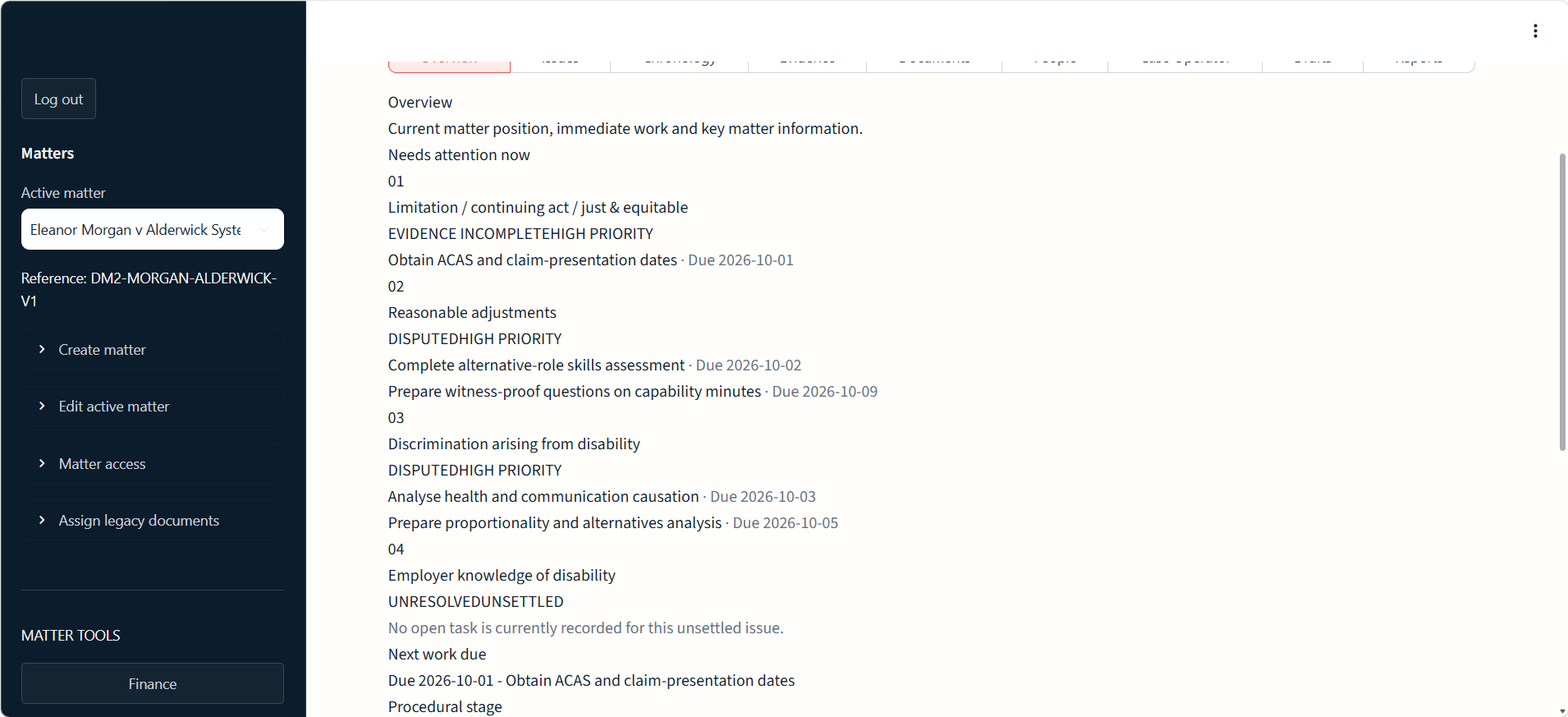
1. Start with the matter, not the answer
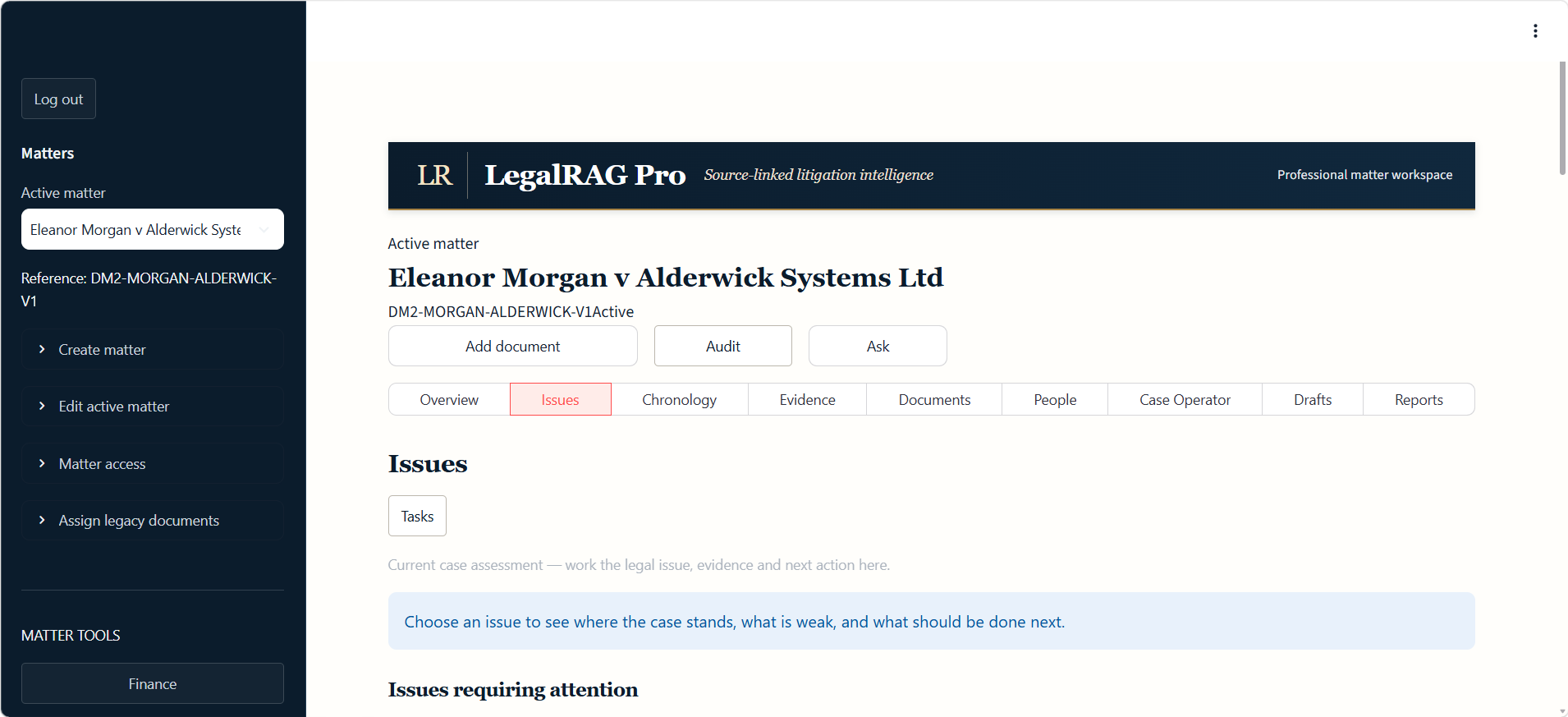
The synthetic matter contains 40 governed source documents. The workspace does not reduce them to one generated conclusion. It presents four legal issues, a chronology, evidence records, people, tasks, reports and drafts as connected views of the same matter.
The overview also exposes what needs attention. Limitation is marked evidence incomplete; reasonable adjustments and discrimination arising from disability are disputed; employer knowledge remains unresolved. Those states are working assessments, not legal determinations.
2. Four issues can have four different evidential positions
The current case assessment does not force every issue into the same confidence level. Employer knowledge is comparatively well supported in the frozen report, while limitation remains evidence incomplete. The two substantive discrimination/adjustment issues preserve disputed material rather than smoothing it away.
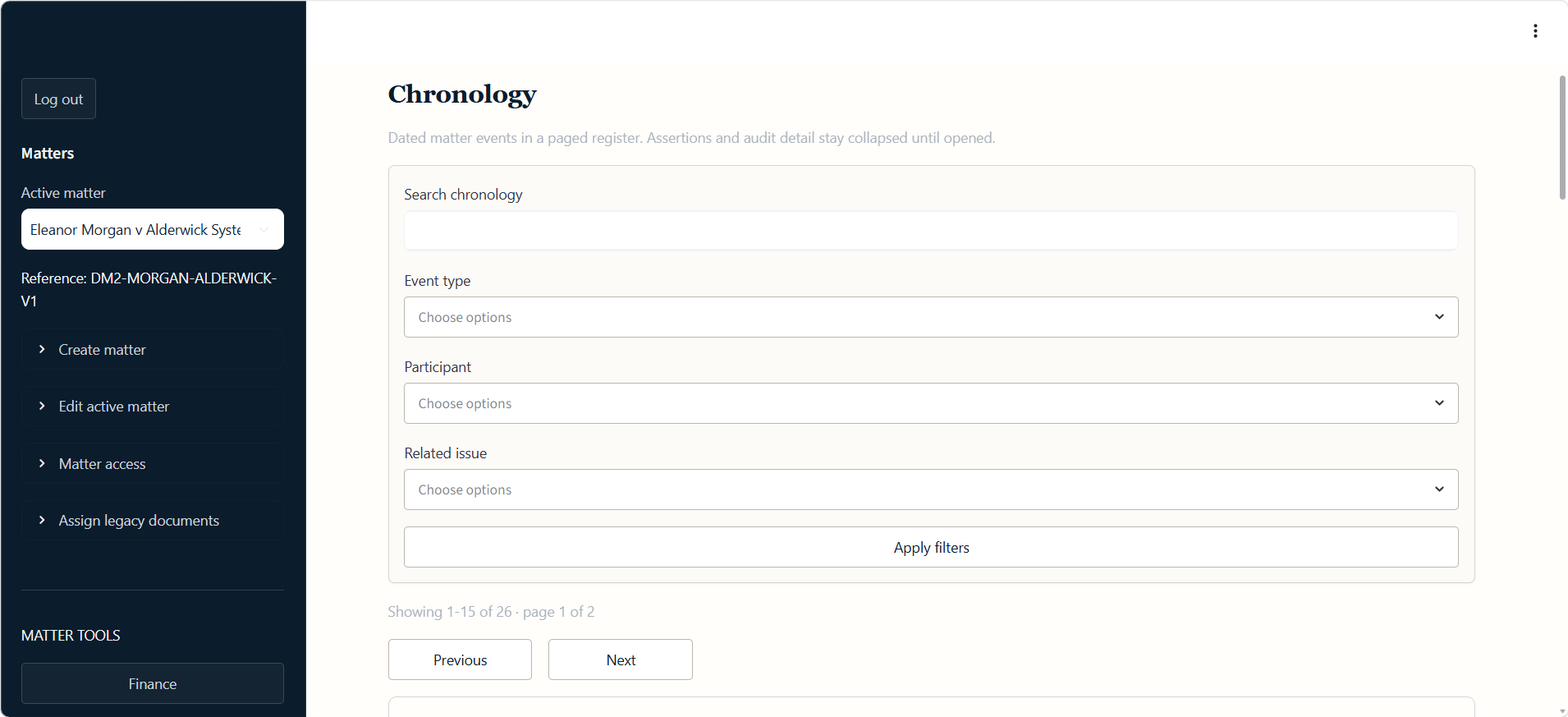
3. Chronology should preserve the evidential route
The chronology contains 26 dated events. The first part of the sequence moves from a health disclosure and fit note through occupational-health advice, adjustment discussions, attendance requirements, capability concerns and disputed meeting records. Each event remains part of a paged matter register rather than being flattened into narrative prose.
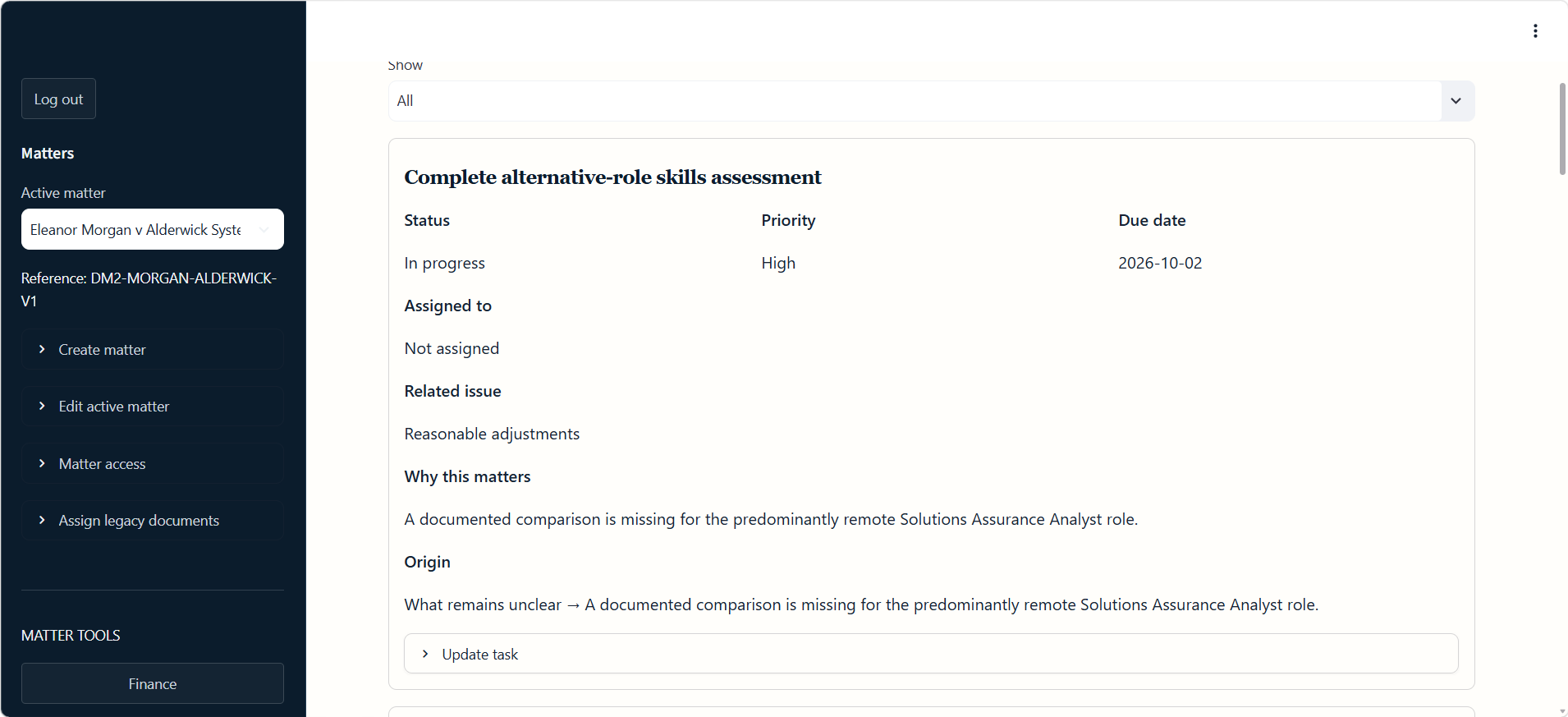
4. Evidence gaps become work, not invented certainty
The matter currently records eight tasks with Open, In progress, Completed and Deferred states. They include obtaining missing ACAS and claim-presentation dates, analysing causation, preparing a proportionality and alternatives analysis, and resolving disputed wording in capability minutes.
This is an important distinction. A missing fact does not have to become an AI guess. It can become an explicit next action.
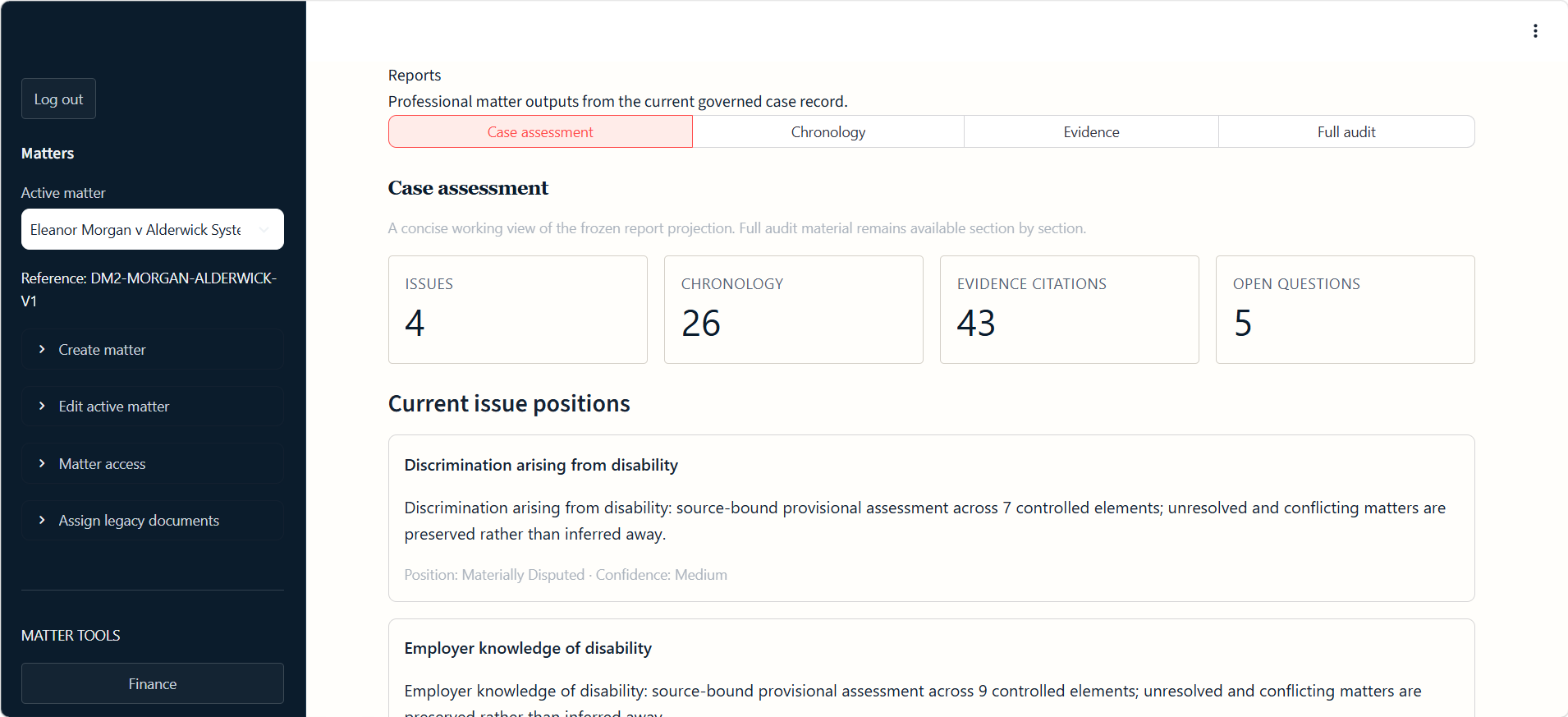
5. The frozen report keeps disagreement visible
The current report projection contains four issues, 26 chronology events, 43 frozen evidence citations and five open questions. The issue summaries expressly preserve unresolved and conflicting matters rather than inferring them away.
6. A citation should lead somewhere inspectable
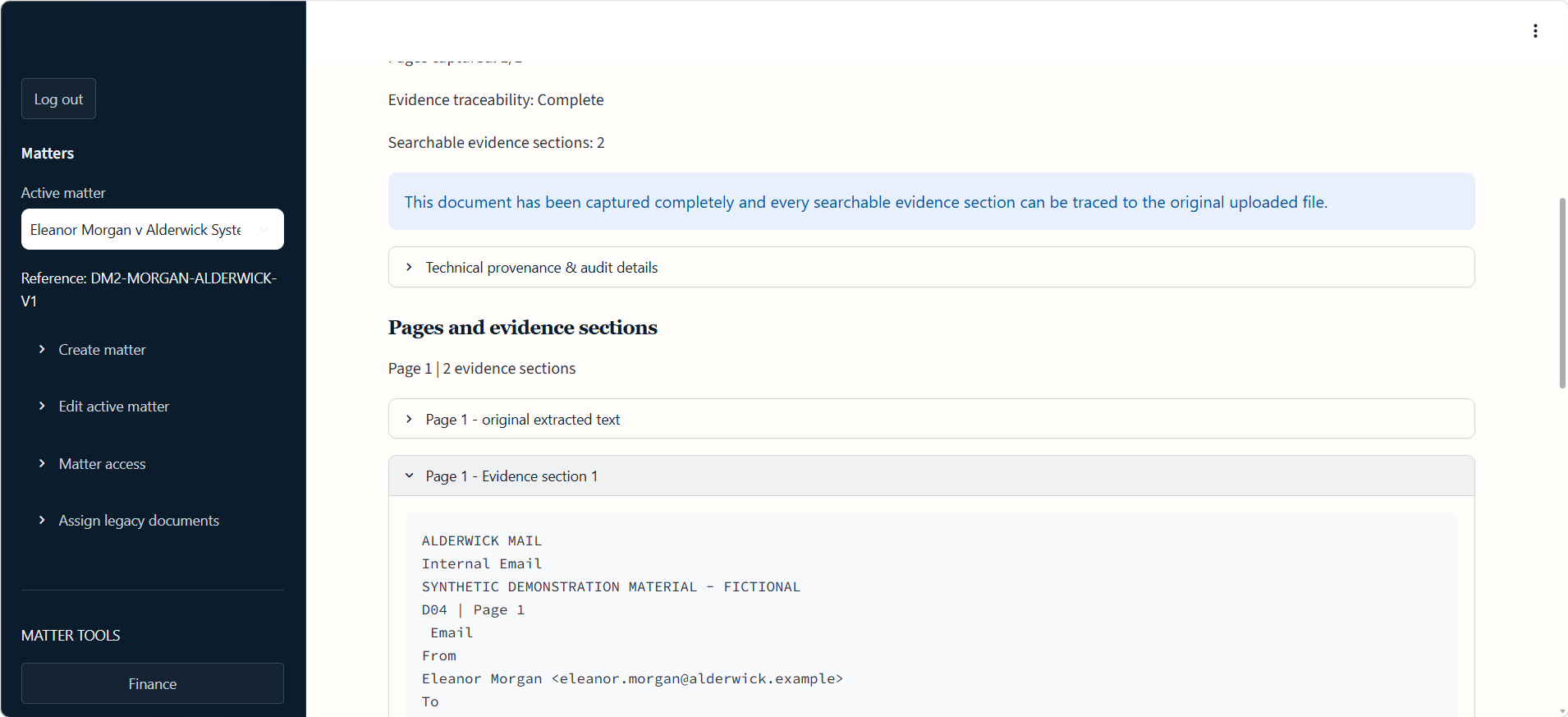
The report contains 43 frozen evidence citations. In the solicitor workspace, an evidence record can be traced into the governed source document. In the example below, the fictional health-disclosure email is shown as fully captured with complete extraction and traceability, and the underlying evidence section can be read directly.
7. Working drafts are not approved legal work
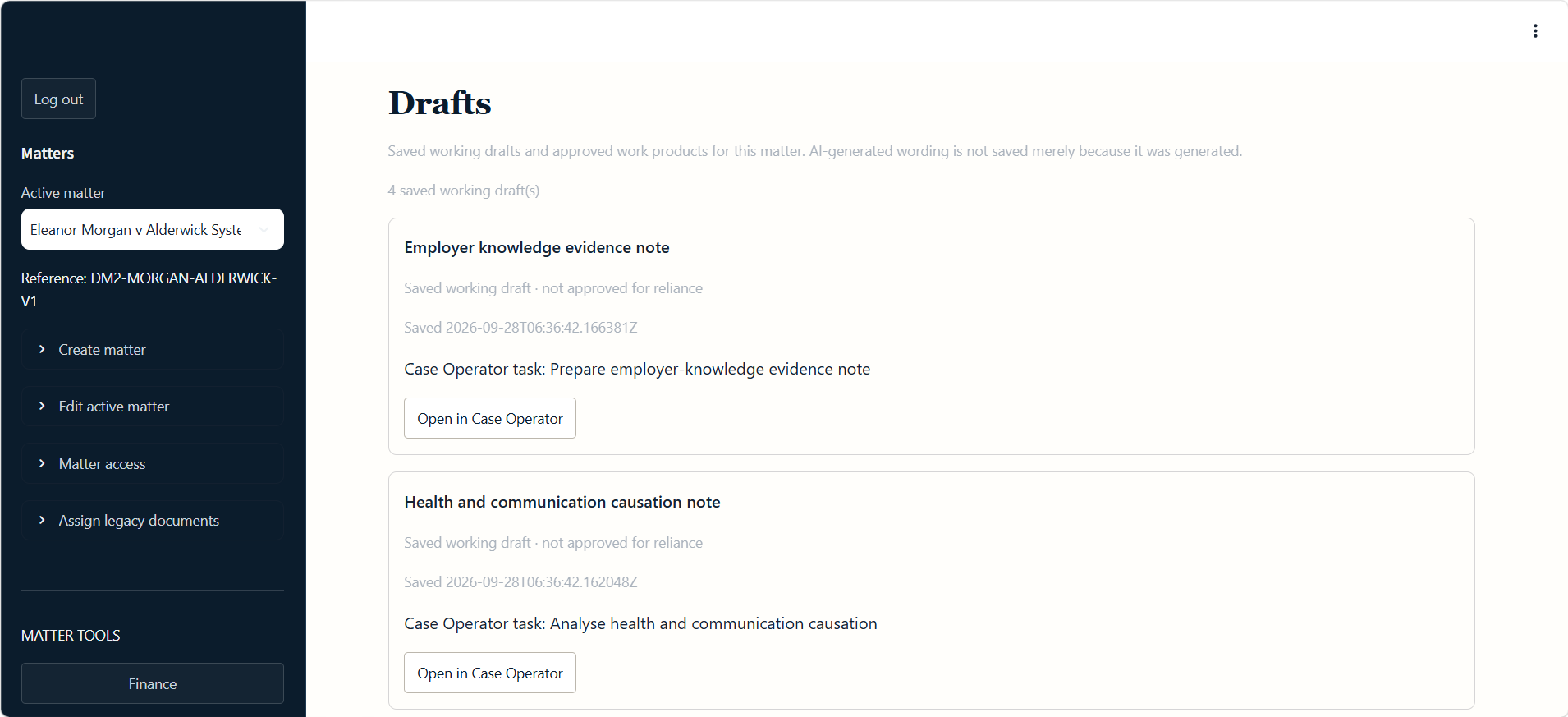
The matter has four saved working drafts: an employer-knowledge evidence note, a health-and-communication causation note, an adjustment implementation chronology note and a limitation information request. Each is explicitly labelled not approved for reliance.
8. What this demonstration establishes — and what it does not
It establishes that a single synthetic contentious matter can be presented with documents, issue positions, chronology, evidence citations, next-action tasks, saved working drafts and an inspectable route to underlying source text. It also shows that uncertainty and professional review can remain visible in the working state.
It does not establish that an AI finding is legally correct, that retrieval is complete in every use case, or that a working draft is suitable for reliance. Those remain professional questions.
See the same workflow in context
Explore the LegalRAG Pro product workspace, the source-verification workflow, the case-chronology workflow and the professional-review model.
Related LegalRAG Pro Insights
Professional context. This is an authorised fictional product demonstration, not legal advice. No client material is shown.